Can You Get a Vehicle with Bad Credit?
How Freedom Cars Assesses Applications
One of the biggest differences between traditional car finance and a vehicle subscription is how applications are assessed.
Many banks and finance companies rely heavily on automated credit scoring systems. If your credit report contains defaults, missed payments, bankruptcy or multiple finance enquiries, your application may be declined before your current circumstances are fully considered.
Freedom Cars takes a different approach.
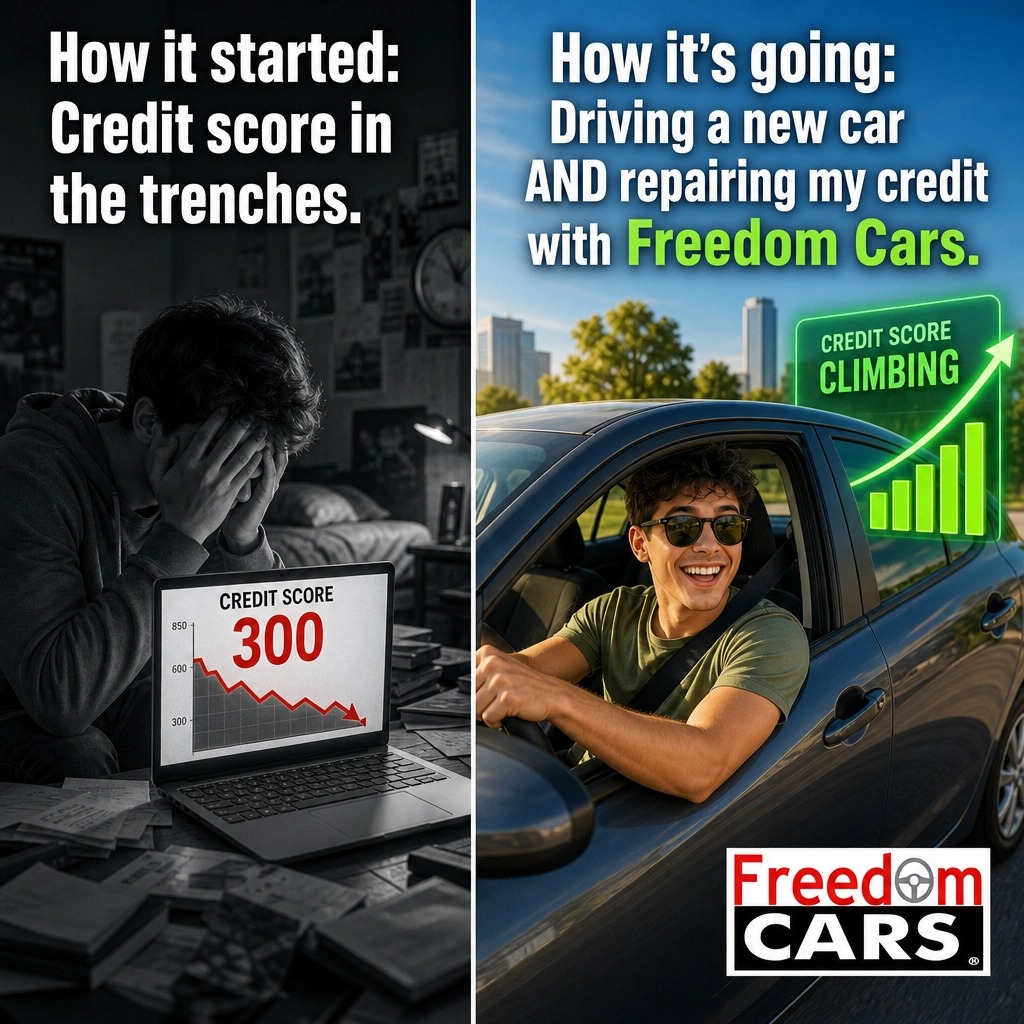
Rather than focusing only on your past, Freedom Cars looks at your current financial position and your ability to maintain affordable ongoing payments. Every application is individually assessed, recognising that a credit score doesn't always tell the full story.
While approval is never guaranteed and eligibility criteria apply, this broader assessment process creates opportunities for many Australians who may have been declined elsewhere.
Why Good People End Up with Bad Credit
A poor credit history doesn't always reflect someone's financial responsibility today.
Many Australians experience temporary setbacks that affect their credit profile, including:
- Job loss
- Business downturns
- Relationship breakdowns
- Medical emergencies
- Rising living costs
- Unexpected family expenses
- Natural disasters
- Economic uncertainty
These events can lead to missed payments or defaults, even for people who have otherwise managed their finances responsibly.
As circumstances improve, many people are financially capable of meeting regular vehicle payments, but their past credit history can continue to limit access to traditional finance.
This is why alternative solutions, such as vehicle subscriptions, have become increasingly popular.
Understanding Credit Scores in Australia
A credit score is a numerical indicator used by credit reporting bodies to help lenders assess lending risk.
Your score may be influenced by factors including:
- Your repayment history
- Current and previous credit accounts
- Credit enquiries
- Defaults
- Court judgments
- Bankruptcy
- Length of credit history
Different lenders use different scoring models, which means there is no single "minimum credit score" that guarantees approval.
It's also important to understand that your credit score is only one part of the assessment process.
Some providers place significant weight on it, while others consider a broader picture of your financial circumstances.
Can You Get a Vehicle with Bad Credit?
Yes—many Australians with impaired credit are able to access a vehicle through alternatives to traditional finance.
Eligibility depends on factors such as:
- Current income
- Employment stability
- Ability to meet ongoing payments
- Identification requirements
- Residency status
- The provider's assessment criteria
Having bad credit doesn't automatically mean you cannot access reliable transport.
The important step is finding a provider whose assessment process aligns with your current financial situation rather than focusing solely on historical credit events.
Vehicle Options After Bankruptcy
Bankruptcy can significantly affect your ability to obtain traditional finance.
Many banks have strict lending policies regarding bankrupt applicants, even after discharge.
However, bankruptcy doesn't necessarily prevent you from accessing transport forever.
Once discharged, many Australians begin rebuilding their financial position by:
- Returning to full-time employment
- Starting a business
- Improving their budgeting
- Re-establishing savings
- Managing regular expenses successfully
Vehicle subscription providers may assess these current circumstances alongside other eligibility requirements, rather than relying exclusively on past financial events.
Every provider has different policies, so it's important to ask questions and understand how applications are assessed.
What If You Have Defaults?
Defaults are one of the most common reasons traditional finance applications are declined.
A default generally indicates that a debt remained unpaid after a prescribed period and was reported to a credit reporting body.
Having a default doesn't automatically define your current financial situation.
Many people accumulate defaults during periods of financial hardship before returning to stable employment and regular income.
A provider that considers your current affordability may be better placed to assess your present circumstances.
Multiple Finance Declines Can Make Things Worse
Many people respond to a declined finance application by immediately applying somewhere else.
Then somewhere else again.
Each application may create another enquiry on your credit file.
Too many enquiries within a short period can create the impression that you're urgently seeking credit, which some lenders view as a higher-risk behaviour.
Instead of submitting multiple applications without understanding why you've been declined, it's often more effective to:
- Review your financial position.
- Understand the provider's eligibility criteria.
- Apply with organisations whose assessment process suits your circumstances.
- Ensure the information you provide is accurate and complete.
Taking a considered approach may improve your chances of finding a suitable solution.
The Benefits of Looking Beyond Your Credit Score
A credit report provides useful historical information, but it doesn't always capture where someone is today.
For example, an applicant may now have:
- Stable employment
- Consistent income
- Lower living expenses
- Improved budgeting
- Regular savings
- Greater financial stability
By considering a wider range of factors, alternative vehicle access models may provide opportunities for people who have worked hard to improve their financial position.
Key Takeaways
Your financial past doesn't always reflect your financial future.
While traditional lenders often focus heavily on historical credit information, vehicle subscription providers may use a broader assessment process that considers your current circumstances and ability to maintain affordable payments.
If you've experienced bankruptcy, defaults, finance declines or other financial challenges, understanding your options is the first step towards getting back on the road.